mrbumcum
You Don't Have to Stay In Your Lane
a reflection on ThinkAchieve
one
The word experiential comes from the Latin experimentum: "a trial, test, proof", which itself traces back to experiri, "to try." At its core, experiential learning is about gaining experience from something new. Doing something outside your comfort zone. Pushing past your own boundaries.
Before college, I had a stubborn plan. I'd get there, network, make friends, and go all in on computer science: deepening my skills and diversifying my knowledge strictly within my domain. A spike, not being a well-rounded student as people would like you to be. I'd spent high school trying to be well-rounded, and I was ready for change.
Freshman year challenged that belief pretty fast.
two
My stubbornness had one weakness: I'm competitive. ThinkAchieve awards points for each experiential learning avenue you try, and the moment I saw that, I stopped asking why and started asking how many. I was like a fish caught in a hook, the only thing is I was caught knowingly. What started as an incentive became something I actually cared about.
three
Every week we get emails about events happening on campus from ThinkAchieve, and it was a highlight seeing what new thing I can try.
Here's a speedrun through the ones that stuck with me:
- International Tea Time: i grew up in the Philippines, and it was genuinely nice to meet people from other cultures in a low-stakes environment
- Free Rock, Mineral, and Fossil Identification: i took "touch grass" to the next level and touched rocks
- Archery: don't rob me. i have a bow and arrow and i know how to use it.
- How to Sue the Klan: a screening about five Black women from Chattanooga who literally sued the Klan. One of the most powerful things I've watched.
- Baldwin v. Buckley: a live rendition of the Baldwin-Buckley debate, followed by an open discussion on one of the most historic conversations about race relations in America.
- Scheherazade by Rimsky-Korsakov: my first time experiencing a live orchestra. it hit different.
- Build Your Own Bibimbap: guess who can make bibimbap now... me.
- TN River Kayaking: we touched grass. then we conquered the seas... moreso the river.
That's a sample. I've been to over 25~ish events, and each one of them was enriching in its own way.
four
Who would've thought I'd be podcasting in college?
I took a podcasting class with the honors college and it was genuinely experiential for me. There were a couple lessons I had to learn.
- kill your darlings: my professor's favorite phrase. you only have a limited amount of time, and your job is to extract the essence of a story rather than include everything. that lesson translated directly into how I approach software. know what you want to build, build that, and resist the urge to feature creep everything into oblivion.
- be intentional: know what you want to say before you say it. have a point. follow through on it. that sounds obvious until you're sitting in an editing bay at 11pm wondering why your episode feels like it's going in five directions at once.
- representation matters: you can be the best engineer in the room, but if you can't represent an idea in a way that resonates with people, it will fall on deaf ears. that took a while to learn.
The class culminated in our own episode series: Tennessee Valley Crossroads, built around one idea: creating a culture of empathy and understanding among students.
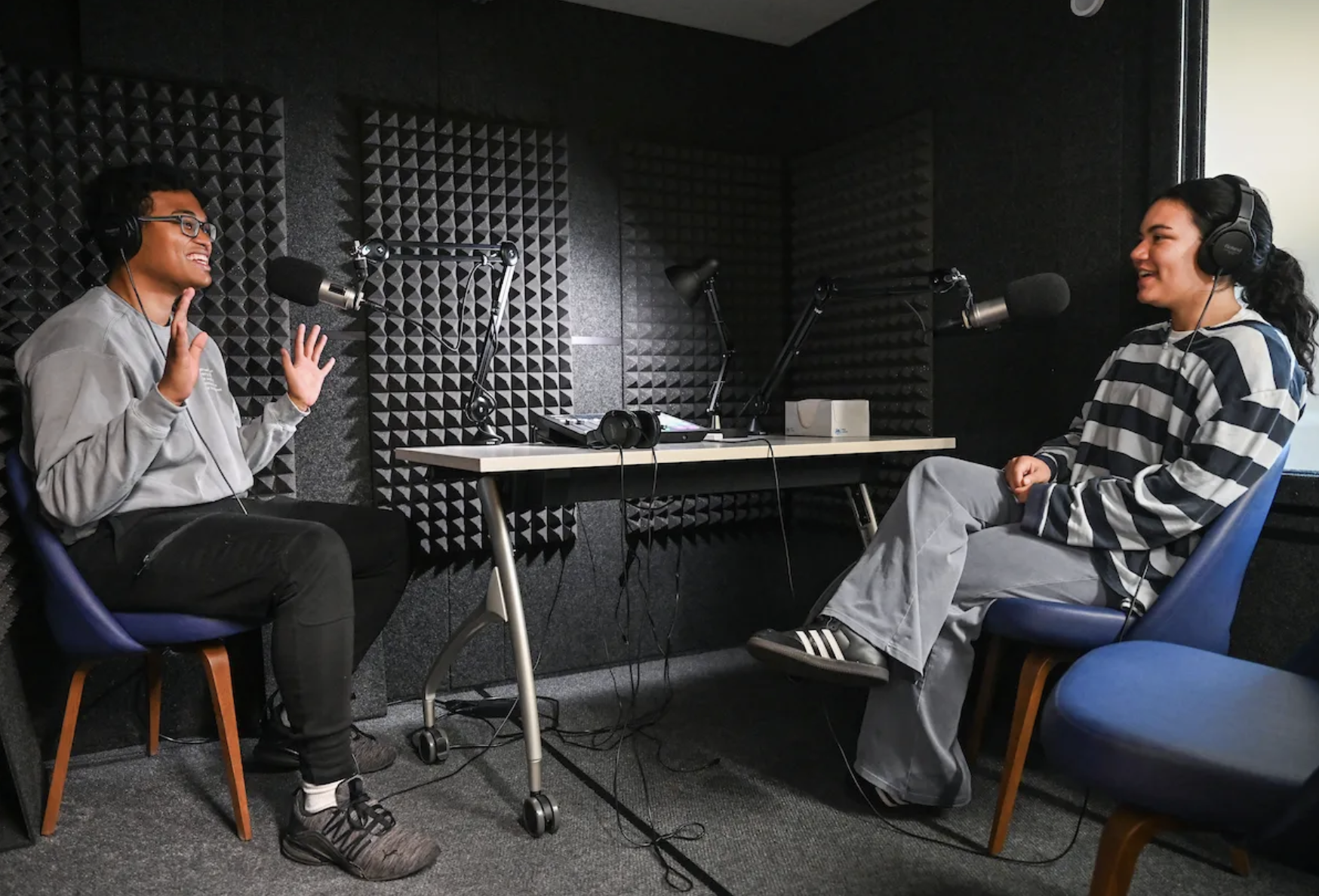
It's not something I would've ever signed up for on my own. ThinkAchieve pushed me toward it. And I'm glad it did.
five
Honestly, I didn't even realize how much of these events have materialized in my life, and how it shaped my values.
From the top of my head, there was something quieter that happened from doing the fossil events and the humanities events: that being that it gave me a deeper appreciation for everything around me. It sounds small, but that kind of enrichment compounds. You start noticing more, and you feel more present. I've noticed that I pay attention to nature more and critique and deconstruct systems more which lead to me inadvertently becoming a better software engineer.
At my job as a sales data analyst for a small computer company, a big part of the work wasn't just doing exploratory data analysis and crunching numbers for the department. It was telling a story about the data to the sales department and the CEO. That's a skill I didn't get from any of my CS classes. I got it from podcasting, from learning how to take raw material and shape it into something that lands for the person on the other side.
With the social conscientiousness events, I was able to leverage that and connect with people better. For example, at my internship at Oak Ridge, I was working alongside people from all over the world in the University of Tennessee labs. Having gone to International Tea Time a few times, I wasn't walking in completely blind. I had a better sense of how people from different cultures communicate, what they value, what builds trust. Those relationships came easier because of it.
And weirdly, the orchestras, plays, and other humanities events taught me how to think about systems. How different parts, when they're in harmony, create something greater than the sum of their components. Music is a system. A debate is a system. Engineering is a system. Learning to hear the symphony between them made me a sharper thinker.
Isn't that awesome?
six
All in all, thinking about it...
ThinkAchieve and the grand challenges it's connected to shaped me into something more than just a student with a technical spike, and I'm grateful for that since a huge part of engineering is connecting with people, and having a variety of experiences can make touching bases with people easier.
If I could give one piece of advice to students at any stage: get out of your comfort zone. Try something that has nothing to do with your major. Sit in on the weird seminar. Go to the free event you'd normally scroll past. It will benefit you and your field in ways you can't predict yet.
The experiri is the point. The trying is the thing.